
English-language theater for young audiences
The English-language theater for children and young people in Berlin
Platypus is one of Berlin’s most productive independent theater groups. We have been making theater for young audiences since 1985, and since 1992 in English as well.
Who we are
The actors, authors and musicians working for Platypus Theater are from numerous English-speaking countries such as Australia, Brazil, Finland, New Zealand, England, Ireland, Israel, South Africa or the U.S.A. Because of our multinational ensemble the “foreignness” that is a central theme in our plays is not only played out, it is real, with different faces, mentalities and experiences of the participants.
Having no theater of its own, Platypus co-operates with numerous Berlin theaters. The most important partners are the BKA Theater and the ufaFabrik. On top of this, Platypus tours its productions throughout Germany.
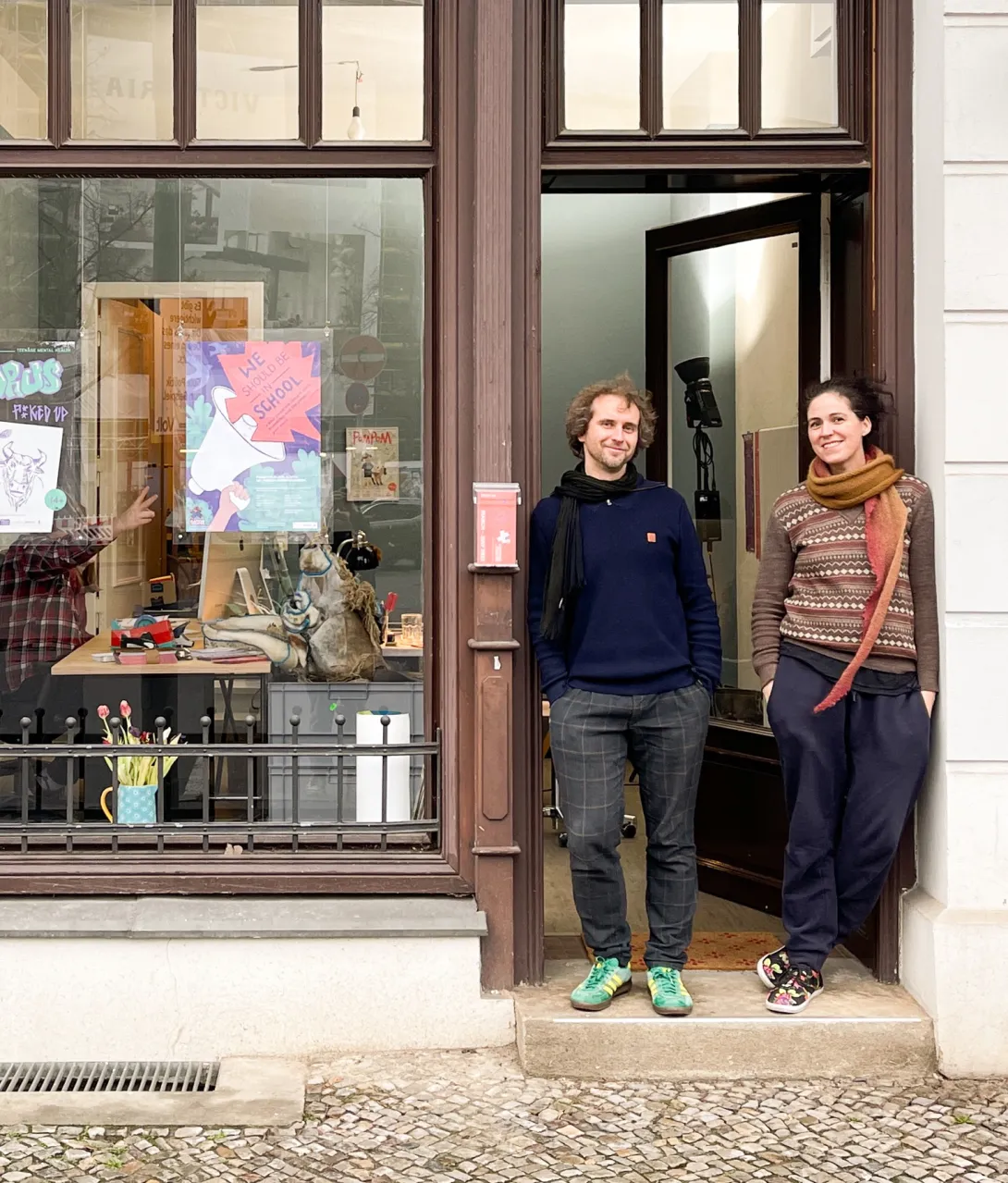
Rachel Pattison and Richard Krutzsch have been running Platypus Theater together since the beginning of 2023.
English theater for learners
How is it possible to produce plays in English for an audience which has only been learning English for a couple of years?
In plays which are viewed in one’s own native language, most audiences have no trouble following a monologue and a number of simultaneously occurring plots and sub plots on the stage. Our long experience shows us that what happens in foreign language theater is different. In our case, it’s a matter of deliberately placing the focus on the most important elements of the plot. We try to avoid introducing distracting parallel plots. Good scripts, with clarity of language, have to be written. Room must be allowed for the comprehension of the words. For a director, it is a major challenge to practice the art of reduction and at the same time develop an interesting artistic concept.
There are very few plays which are suitable for this special challenge. Many plays are too verbal for our purposes and are written for their own language area and culture. Nearly all Platypus plays have therefore been produced as the result of an intense artistic work process involving the actors, the director, the dramaturg and the authors. The utilization of a foreign language is a conscious stylistic device for us. It goes way further than merely replacing a word in German through a word in another language.
“I understood everything, my worries were unfounded.”
The audience should leave the theater with this sense of achievement. A visit to Platypus Theater is both an exciting experience and a motivational booster.
The major goal remains producing good and intelligent theater for young audiences who come from all social classes.
History

1985
Platypus Theater is founded in West Berlin by the Berlin born Anja Scollin and the Australian born Peter Scollin. The theater is named after the rare Australian animal, the platypus.
Clownesque self-devised plays are performed in German in various spaces in nearly every suburb of West Berlin. In the early years, four plays are written with different casts of actors and the theater quickly becomes well known to organizers.
1992
Platypus produces its first play in English in February 1992, two years after the wall dividing the city of Berlin went down. Due to the overwhelming response, the entire structure of Platypus Theater develops rapidly: the artistic concept, the size of the ensemble, the size of the theaters performed in and the audience profile.
Putting on plays in English gives the production team a great amount of freedom, both artistically and in content matter. There is no need to base plays on school syllabus themes. The team can devise plays about things which interest them and their audiences.
1993
“Play to Win”, a play about addiction to computer games, is way ahead of its time.
2007
“Dream Beach” looks at current and historic developments in Australia.
2023
Rachel Pattison and Richard Krutzsch take over the direction of the theater together.
“Icarus f**ked up!” receives the youth jury’s IKARUS 2023 (Berlin’s award for children’s and youth theater) as best play in the youth theater category.
2026
“London Calling” receives the youth jury’s IKARUS 2026 (Berlin’s award for children’s and youth theater) as best play in the youth theater category.
Today
The artistic team repeatedly takes on new content and new artistic challenges and goes into new territory with regard to themes, production styles and aesthetics.

